
How to Transition from Museum Educator to Strategic Museum Leader
Episode 25
Released 6/3/2026

Listen to today's episode on Becoming a Strategic Museum Leader using Systems Thinking Techniques
Main Topics Covered in this Episode
The Mindset Shift from Tactical to Strategic
Moving from a frontline role to a departmental director requires a fundamental shift in how we view our work and our capacity. Frontline museum educators must think tactically, focusing on the immediate logistical needs of a program, such as supplies, timing, and direct audience interaction. Strategic museum leadership, however, requires us to zoom out to a macro level, allowing us to recognize hidden dependencies, cross-departmental bottlenecks, and competing institutional priorities.
Hard Systems vs. Soft Systems Thinking
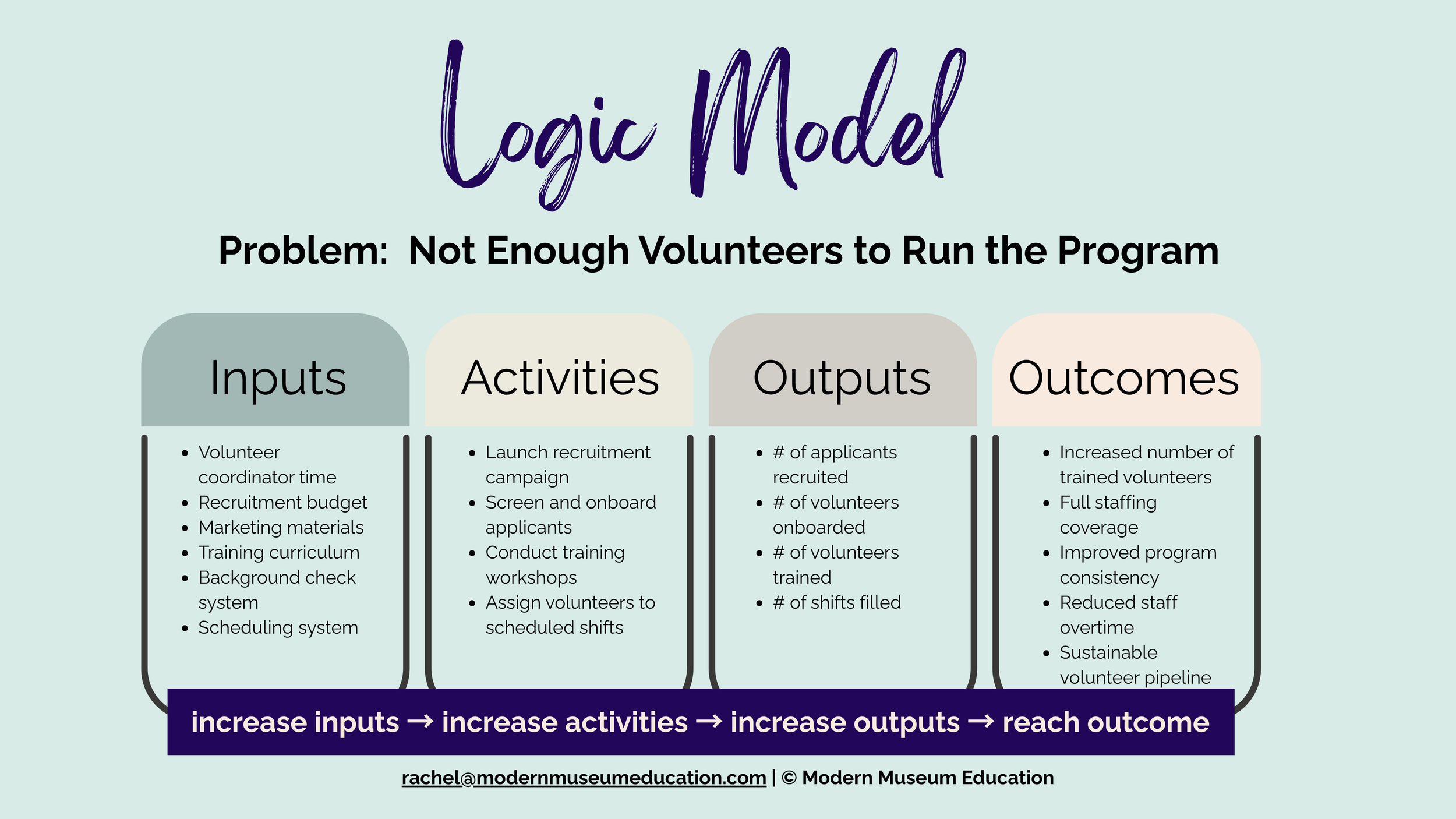
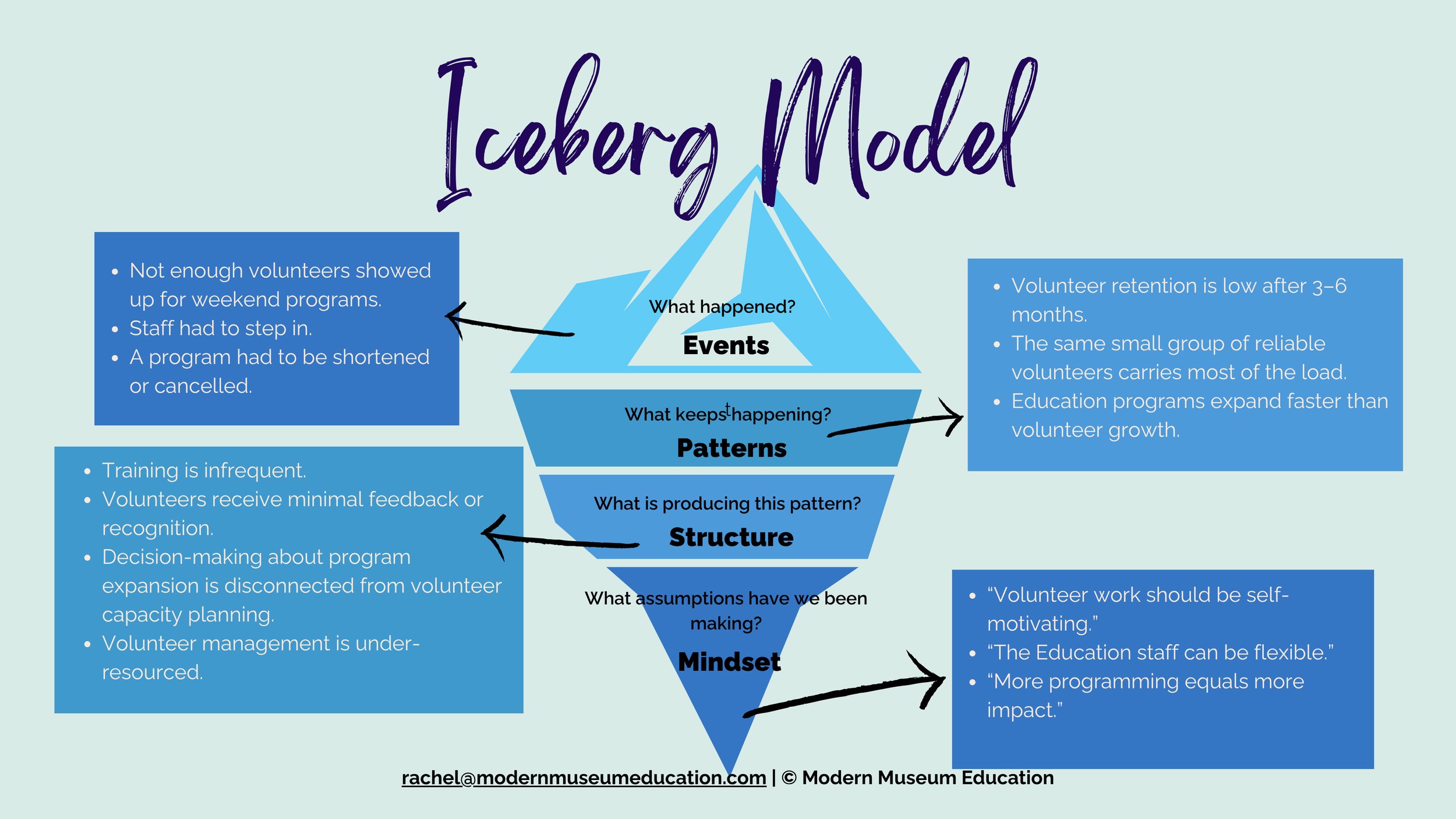
To diagnose and resolve operational friction, we must understand the two primary models of systems thinking: hard and soft. Hard systems thinking is outcome-oriented and linear, making it ideal for solving clear, observable logistical challenges using tools like logic models. Soft systems thinking is people- and process-oriented, making it the perfect approach for exploring deeper, systemic organizational patterns and stakeholder mindsets through frameworks like the iceberg model.
Breaking the Cycle of Shifting the Burden
Too many museum education departments survive on daily heroic effort and short-term "band-aid" fixes rather than sustainable operational workflows. When we rely on quick fixes, we inadvertently shift the burden away from the actual root problem and perpetuate a cycle of staff burnout. True strategic authority involves establishing professional boundaries and dedicated time to implement long-term structural solutions.


Resources Mentioned in the Episode
All the resources referenced in this episode are linked here.
Find out how to partner with Rachel to improve your museum programs
You can find all the books I recommend on this podcast on my Bookshop.org Podcast Recommendations & Resources List, including the ones mentioned in this episode:
The two models (logic and iceberg) examples referenced in the episode can be seen below:
Strategic Museum Education Leadership FAQs
What is the difference between a museum educator and a strategic museum leader?
A museum educator operates primarily on a tactical, logistical level, focusing on the immediate "who, what, when, and where" of running successful programs. A strategic museum leader looks beyond individual programs to examine department-wide and institution-wide systems. They focus on macro-level priorities like multi-year planning, cross-departmental politics, institutional budgeting, and structural sustainability.
How do you transition from museum educator to strategic museum leader when you feel stuck in daily chaos?
The transition requires a fundamental shift in mindset and the application of a structured framework like systems thinking. Instead of viewing operational friction as a personal failure or trying to power through via sheer force of will, you must zoom out to look at structural decisions and hidden dependencies. Actively carving out non-negotiable time for evaluation, high-level development, and policy advocacy is key to stepping into strategic authority.
What tools can help a museum educator think like a strategic leader?
Systems thinking frameworks like the EPIC process (Explore, Produce, Intervene, Check) can help leaders map out and test institutional changes. Additionally, utilizing hard systems tools (like logic models) helps resolve linear capacity challenges, while soft systems tools (like the iceberg model or feedback loops) allow leaders to dig beneath surface-level symptoms to address deep-rooted cultural and structural issues.
Related Episodes and Blog Posts
Is your interest peaked? Find out more with these related episodes and posts.
Episode 2: The History of Museum Education
Connect with Rachel
Let’s keep the conversation going!
How can I help you? Discover my museum support services for budgets of all sizes!
Join the Engagement Lab, our free community, where I answer your real questions in real-time
Connect with me on LinkedIn and find out what conference I’m headed to next!
More About The Modern Museum Education Podcast
The Modern Museum Education Podcast is for museum educators who are stretched thin but know this job is worth it!
Designed for busy professionals at small and mid-sized museums, this is the go-to resource for quality advice and ideas to help you reverse the cycle of being overworked and underappreciated.
Here we bridge the gap between education scholarship and real-world realities. Each week we dive into how the latest research in museum pedagogy can make your work simpler, easier, and less stressful.
Each week you can look forward to bite-sized, actionable tips and support, grounded in solid research and Rachel’s decades of experience. Listen and learn more about:
Family Program Design
Visitor Motivation
Avoiding Staff Burnout
Dealing with Difficult Audiences
Leading with Empathy
…and more!
What Can We Create Together?
Let’s Close Those “Someday” Tabs for good
Museum education projects shouldn’t have to linger in the background.
Click here to learn how I can help make things easier for you. Or just drop me a quick message and we’ll untangle your problems together.
It took me years to figure out what really turns a spark into substance on the museum floor. But now I’m sharing all of my research and experience with you!
The Engagement Lab is a free, monthly broadcast hosted on Telegram! Each month, I’ll drop voice notes breaking down real engagement strategies (and why they work). Bring your ideas, ask your questions, and get research-backed insight you can actually use.
It’s free and easy to join — even if you’ve never used Telegram before!
P.S. When you sign up, you’ll also get access to all the free resources I’ve created before!