
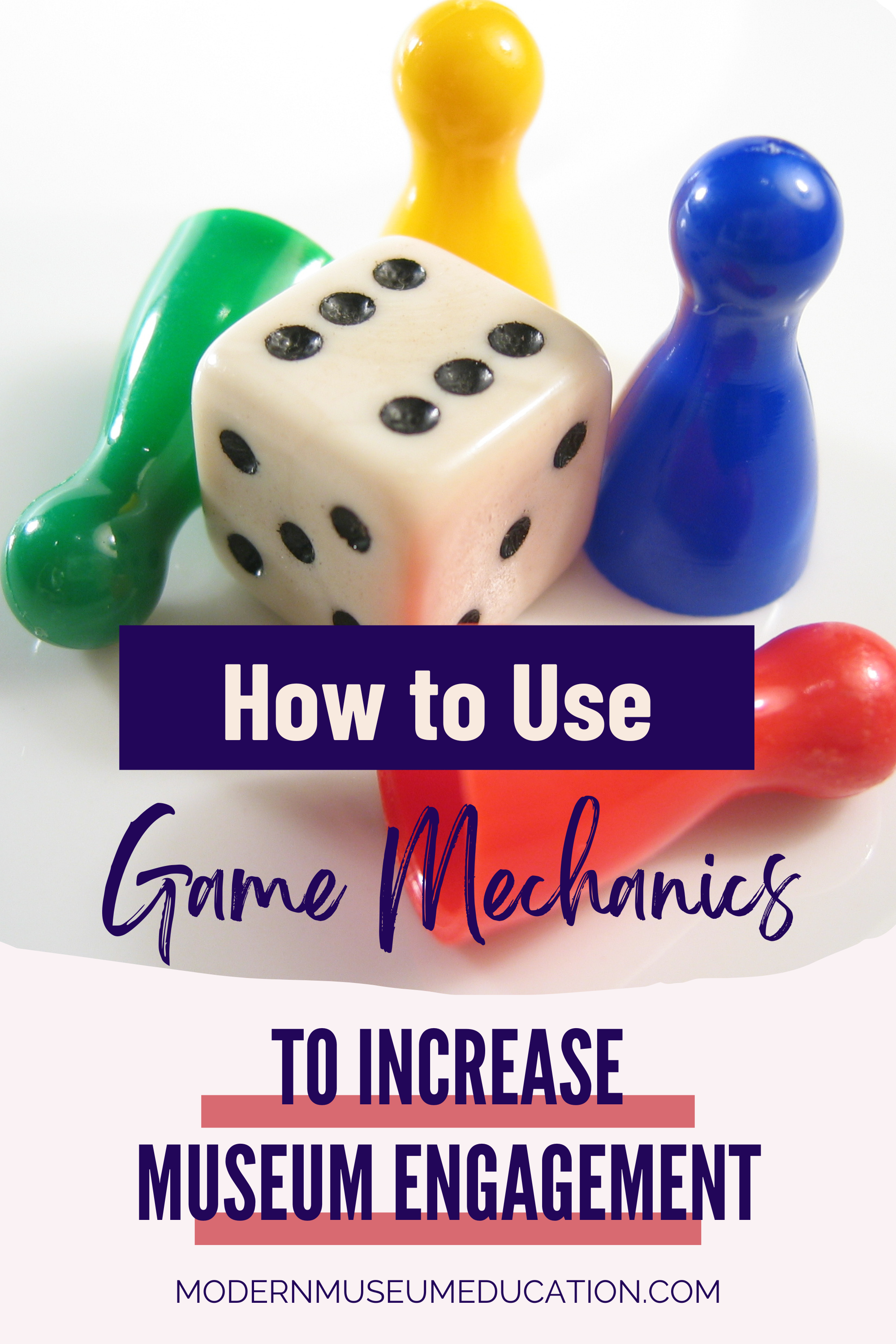
How to Use Game Mechanics to Increase Museum Engagement
Episode 24
Released 5/27/2026

Listen to today's episode on Using Game Mechanics to Increase Museum Engagement
Main Topics Covered in this Episode
Overcoming the Culture Clash of Play
Museum educators have faced a historical tension between maintaining serious institutional authority and welcoming the unpredictable, playful nature of people, especially children. This adult-centric mindset often marginalizes the lived experiences of younger visitors and fractures institutions into kid-friendly versus non-kid-friendly zones. However, gamification acts as a pedagogical architecture that respects both the museum's mission and the visitors' cultural entry points, allowing true engagement to happen on a two-way street.
Accepting Game-Based Learning as an Intentional Pedagogy
Generally, we should limit playing games in our museums just for the sake of being fun, although exceptions exist. However, most of the time, every playful activity must intentionally point visitors toward our defined learning goals to ensure we remain true to our educational missions.
Activating the 5 Rs of Game Mechanics
Game mechanics are simply engagement principles that mirror Keller's ARCS model of learner motivation by capturing attention, establishing relevance, building confidence, and offering satisfaction. We can mix, match, and scale five core principles to fit any subject matter, including difficult or serious history topics. These five principles (according to Bisz and Mondelli) include Random (mechanics of chance and nonlinear choices), Rapid (varying the pace to prevent museum fatigue), Rival (helping visitors challenge their own past selves through low-stakes, achievable objectives), Reward (immediate feedback, like lift-the-flap gallery elements), and Role (using themes, emotions, or archetypes to safely inspire deep historical empathy).


Resources Mentioned in the Episode
All the resources referenced in this episode are linked here.
Find out how to partner with Rachel to improve your museum programs
You can find all the books I recommend on this podcast on my Bookshop.org Podcast Recommendations & Resources List, including the ones mentioned in this episode:
Falk, J. H. (2022). The value of museums: Enhancing societal well-being. Rowman & Littlefield.
Falk, J. H., & Dierking, L. D. (2018). Learning from museums (2nd ed.). Rowman & Littlefield.
Bisz, J., & Mondelli, V. L. (2023). The educator’s guide to designing games and creative active-learning exercises: The ALLURE of play. Teachers College Press.
Academic Articles Referenced:
For more on childism, see the Childism Institute: https://www.childism.org/
2024 study categorizing types of museum games
Seale, N., Smith, W., & Rogerson, M. J. (2025). A Typology of Museum Games: Towards a Museum Game Design Toolkit. Proceedings of the 36th Australasian Conference on Human-Computer Interaction, OzCHI ’24, 760–765. https://doi.org/10.1145/3726986.3727045
Keller’s ARCs Framework
Keller, J. M. (1987). Development and use of the ARCS model of instructional design. Journal of Instructional Development, 10(3), 2–10. https://doi.org/10.1007/BF02905780
Playing Games in Museums FAQs
Can you use game mechanics for difficult or serious museum subjects without making light of the topic?
Absolutely. While lighthearted gameplay should be reserved for lighthearted topics, game mechanics are fundamentally just engagement principles. By stripping away the "frivolous" look of a traditional game, you can extract core mechanics—like feedback loops, role-based empathy, or nonlinear choices—and apply them rigorously to serious narratives to help visitors navigate complex content without feeling cognitive friction.
What is a "playful non-game" and how does it increase museum engagement?
A playful non-game is an interactive, engaging experience that utilizes foundational game mechanics but does not meet the formal, rigid definition of a "game". It increases engagement by serving as a subtle hook for a visitor's attention and personal motivation. It provides a low-stakes environment where learning happens naturally—essentially acting as "play in a trench coat.” Using non-games is the perfect way to include game mechanics in your programming when traditional game play may not be welcome or appropriate.
How do I make sure our museum's gamified elements are pedagogically sound and not just "busy work"?
To ensure strong pedagogy, you must consciously map your activity elements directly to learning action verbs pulled straight from Bloom's taxonomy (such as analyze, compare, or investigate). If you cannot match a specific game element to a precise cognitive action that helps visitors overcome a known learning bottleneck, you don't have good pedagogy—you just have "good vibes" or a generic distraction.
Related Episodes and Blog Posts
Is your interest peaked? Find out more with these related episodes and posts.
Connect with Rachel
Let’s keep the conversation going!
How can I help you? Discover my museum support services for budgets of all sizes!
Join the Engagement Lab, our free community, where I answer your real questions in real-time
Connect with me on LinkedIn and find out what conference I’m headed to next!
More About The Modern Museum Education Podcast
The Modern Museum Education Podcast is for museum educators who are stretched thin but know this job is worth it!
Designed for busy professionals at small and mid-sized museums, this is the go-to resource for quality advice and ideas to help you reverse the cycle of being overworked and underappreciated.
Here we bridge the gap between education scholarship and real-world realities. Each week we dive into how the latest research in museum pedagogy can make your work simpler, easier, and less stressful.
Each week you can look forward to bite-sized, actionable tips and support, grounded in solid research and Rachel’s decades of experience. Listen and learn more about:
Family Program Design
Visitor Motivation
Avoiding Staff Burnout
Dealing with Difficult Audiences
Leading with Empathy
…and more!
What Can We Create Together?
Let’s Close Those “Someday” Tabs for good
Museum education projects shouldn’t have to linger in the background.
Click here to learn how I can help make things easier for you. Or just drop me a quick message and we’ll untangle your problems together.
It took me years to figure out what really turns a spark into substance on the museum floor. But now I’m sharing all of my research and experience with you!
The Engagement Lab is a free, monthly broadcast hosted on Telegram! Each month, I’ll drop voice notes breaking down real engagement strategies (and why they work). Bring your ideas, ask your questions, and get research-backed insight you can actually use.
It’s free and easy to join — even if you’ve never used Telegram before!
P.S. When you sign up, you’ll also get access to all the free resources I’ve created before!