
How to Design Museum Programs for Kids and Adults
Episode 22
Released 5/20/2026

Listen to today's episode on how to design museum programs for kids and adults!
Main Topics Covered in this Episode
Shifting from "Family Friendly" to True Collaborative Learning
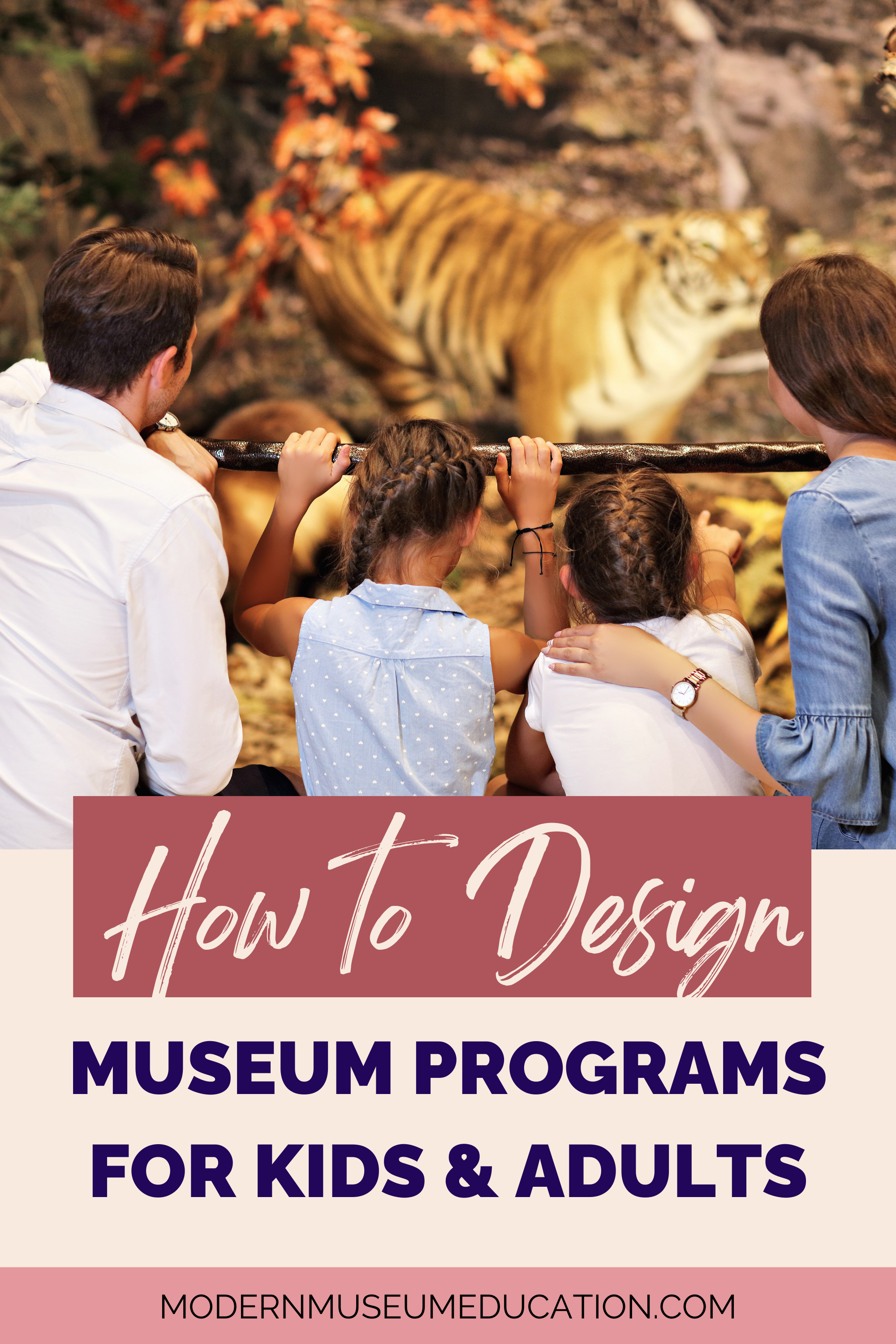
It’s time to look past basic family-friendly add-ons or separate kids' galleries that small museums don't have the space for anyway. True impact happens when we transition to collaborative family learning experiences that position grownups to excel as natural facilitators for their kids. By centering your program design around shared communal experiences, you make sure no one is just "tagging along" and blankly staring at the floor.
Maximizing Small Spaces with Multi-Sided and Multi-User Principles
You don't need a massive budget to completely change how families interact with your exhibits. Instead utilize two easy-to-implement principles: making spaces "multi-sided" (so a whole group can physically gather around an activity), and making them "multi-user" (so there is something for everyone).
Layering Content with Object-to-Self Connections
Think of your museum content like a delicious layer cake where everyone gets the flavor or depth of information they actually need at the exact same time. You can easily pull this off by prompting visitors to make "object connections". By asking simple, open-ended questions that tap into universal human experiences, you get kids and adults thinking, talking, and uncovering answers together.


Resources Mentioned in the Episode
All the resources referenced in this episode are linked here.
Find out how to partner with Rachel to improve your museum programs
You can find all the books I recommend on this podcast on my Bookshop.org Podcast Recommendations & Resources List
Academic Articles Referenced:
The U.S.S. Constitution Museum’s Engage Families Project
Designing Museums Programs for Family Groups FAQs
Q: How do you design museum programs that work for kids and adults at the same time if you don't have a dedicated kids' space?
A: You do it by focusing on collaborative program design rather than physical real estate. By implementing "multi-user" principles and layering your content, you can deliver multiple levels of information to different age groups simultaneously within your existing galleries or even out on the museum grounds.
Q: What is the easiest way to start layering content for different age groups without rewriting all our museum labels?
A: The absolute easiest hack is using object connections during guided tours or on simple activity prompts. Ask open-ended questions that spark universal human reflections, like asking what object reminds them of a celebration, a superpower, or someone in their family. This keeps adults intrigued while giving kids an immediate, personal way to participate.
Q: What is the difference between an activity being "multi-sided" versus "multi-user"?
A: Think of multi-sided as a physical space requirement: Is there literally enough room for a small group to comfortably stand around the exhibit and see it together without taking rigid turns? Multi-user is a cognitive design requirement: Does the activity provide different entry points of information so everyone can participate regardless of their age, physical ability, or background knowledge?
Related Episodes and Blog Posts
Is your interest peaked? Find out more with these related episodes and posts.
Episode 21: How to Foster Family Engagement in Museums
Episode 6: Finding What’s Personal in a Museum
Connect with Rachel
Let’s keep the conversation going!
How can I help you? Discover my museum support services for budgets of all sizes!
Join the Engagement Lab, our free community, where I answer your real questions in real-time
Connect with me on LinkedIn and find out what conference I’m headed to next!
More About The Modern Museum Education Podcast
The Modern Museum Education Podcast is for museum educators who are stretched thin but know this job is worth it!
Designed for busy professionals at small and mid-sized museums, this is the go-to resource for quality advice and ideas to help you reverse the cycle of being overworked and underappreciated.
Here we bridge the gap between education scholarship and real-world realities. Each week we dive into how the latest research in museum pedagogy can make your work simpler, easier, and less stressful.
Each week you can look forward to bite-sized, actionable tips and support, grounded in solid research and Rachel’s decades of experience. Listen and learn more about:
Family Program Design
Visitor Motivation
Avoiding Staff Burnout
Dealing with Difficult Audiences
Leading with Empathy
…and more!
What Can We Create Together?
Let’s Close Those “Someday” Tabs for good
Museum education projects shouldn’t have to linger in the background.
Click here to learn how I can help make things easier for you. Or just drop me a quick message and we’ll untangle your problems together.
It took me years to figure out what really turns a spark into substance on the museum floor. But now I’m sharing all of my research and experience with you!
The Engagement Lab is a free, monthly broadcast hosted on Telegram! Each month, I’ll drop voice notes breaking down real engagement strategies (and why they work). Bring your ideas, ask your questions, and get research-backed insight you can actually use.
It’s free and easy to join — even if you’ve never used Telegram before!
P.S. When you sign up, you’ll also get access to all the free resources I’ve created before!